


Cytogenetics comes from the combination of two words: Cyto (relating to cells) and genetics (relating to genetic variation).
June 16, 2026Current studies have found that women of color have higher rates of BRCA1 and BRCA2 mutations than previously expected, and breast cancer in women of color
June 16, 2026 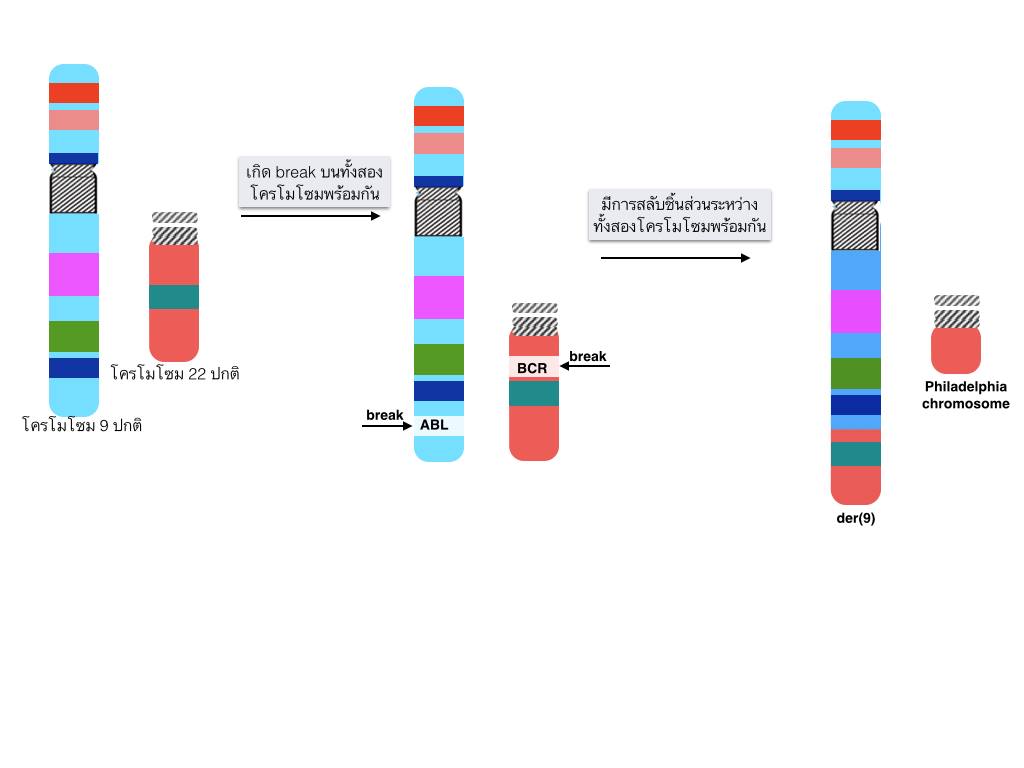
Chronic Myelogenous leukemia (CML) is a type of blood cancer characterized by the proliferation of myeloid cells. Under normal conditions, these cells develop into neutrophils, eosinophils, and basophils, and the increased cells have a specific chromosomal abnormality, namely a translocation between chromosomes 9 and 22, which is an exchange of segments between chromosomes 9 and 22. Chromosome 9 has a lengthened end of its long arm, while chromosome 22 becomes shorter. We call this segment of chromosome 22 the Philadelphia chromosome (Philadelphia, Ph chromosome). The translocation results in a fusion gene from the BCR-ABL1 gene on the Ph chromosome. This fusion gene activates the function of other proteins on its own, without waiting for commands from the cell, causing the proliferation of cells that the body does not need. This fusion gene can also halt DNA repair, so that abnormal genes are not repaired, leading to increasing abnormalities in other genes. CML is divided into 3 types: chronic phase, accelerated phase, and blast crisis.